2026 Best Miniature Gear Motor Types for Buyers?

Time:2026-10-27 Author:Henry
0%

Choosing the right Miniature Gear Motor in 2026 requires more than comparing speed and price. Buyers must connect motor design with the real working conditions of their equipment. A compact motor inside a camera slider, medical pump, robotic joint, or automatic latch may face very different demands. Torque, voltage, gear ratio, noise, heat, duty cycle, and available space all influence performance.

Small details matter.

Planetary gear motors can deliver strong torque in limited spaces, while spur gear motors often offer a simpler and more affordable solution. Worm gear motors may provide useful holding ability, but they can lose efficiency and generate additional heat. Brushless options suit products requiring longer service life and quieter operation. Brushed motors remain practical for cost-sensitive designs and intermittent use.

This guide compares the main miniature gear motor types available to buyers in 2026. It considers practical specifications, supplier reliability, customization, testing evidence, and long-term operating costs. Experienced engineers usually request load tests, dimensional drawings, noise data, and gearbox backlash measurements before approving a model. A polished datasheet is helpful, but it cannot replace hands-on validation.

No motor fits everything.

Real-world performance may differ from laboratory figures because friction, alignment, temperature, and changing loads affect results. Some manufacturers also describe peak torque more prominently than continuous torque, which can lead to poor selection. Readers should treat advertised ratings carefully and confirm requirements with qualified technical teams. The best choice balances dependable output, efficient integration, service life, and realistic budget expectations.
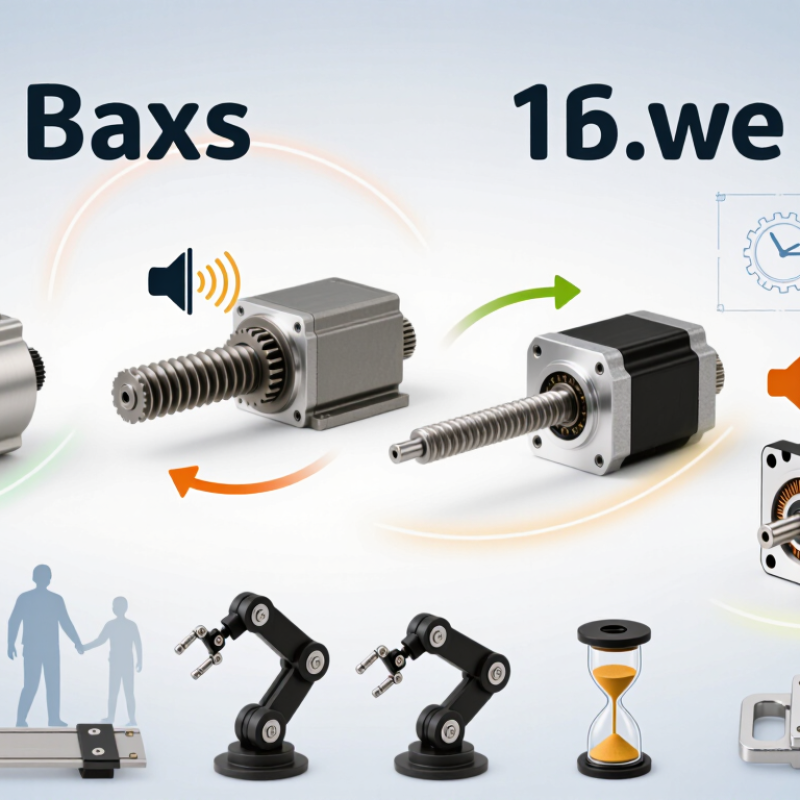
2026 Best Miniature Gear Motor Types for Buyers?

Miniature Gear Motor Basics: Torque, Speed, Voltage, and Gear Ratios

2026 Best Miniature Gear Motor Types for Buyers?

Miniature Gear Motor Basics: Torque, Speed, Voltage, and Gear Ratios

Choosing a miniature gear motor begins with the load, not the catalog photo. Torque describes turning force at the output shaft. A small conveyor, valve, or camera mechanism may need more starting torque than running torque. Measure both when possible. My first selection mistake was checking rated torque only. The motor stalled during startup.

Speed depends on the motor’s unloaded rotation, gearbox reduction, and applied load. A high ratio usually lowers output speed and increases available torque. It also increases backlash, noise, and response delay. For precise movement, compare rated speed with real operating speed. Do not assume “slow” means accurate. Voltage must match the control system and motor specification. A higher voltage can change speed, current, heat, and service life. Check stall current before choosing a driver or power supply. It can be several times higher than normal running current.

Measure the shaft under realistic friction. Bench tests often look better than installed performance. Gear type matters too. Spur gears are compact and efficient, while planetary gears can handle heavier loads. Worm gears may resist back-driving, but they often waste more power. Review duty cycle, noise limits, shaft direction, mounting space, and allowable temperature. Datasheets help, but measured results matter more. I would leave a safety margin, yet not blindly oversize the motor. Oversizing can reduce efficiency and control quality.

2026 Best Miniature Gear Motor Types for Buyers? - Miniature Gear Motor Basics: Torque, Speed, Voltage, and Gear Ratios

Typical selection ranges for miniature DC gear motors. Actual performance depends on motor size, load profile, duty cycle, temperature, lubrication, and gearbox design.

Gear Motor Type Typical Voltage Typical Gear Ratio Typical Output Speed Typical Continuous Torque Approx. Gearbox Efficiency Main Advantages Best-Fit Applications
Spur Gear Motor 3–24 V DC 3:1–1,000:1 10–3,000 rpm 0.005–0.50 N·m 65–85% Compact, economical, broad ratio range, easy to source Small pumps, fans, toys, locks, displays, and light automation
Planetary Gear Motor 3–24 V DC 4:1–500:1 20–5,000 rpm 0.02–2.00 N·m 75–92% High torque density, good load sharing, low backlash options Robotics, medical mechanisms, precision actuators, and positioning systems
Worm Gear Motor 6–24 V DC 10:1–300:1 2–300 rpm 0.05–3.00 N·m 35–75% High reduction in a compact package; may resist reverse driving Valves, gates, seat adjusters, lifts, and low-speed positioning
Bevel Gear Motor 6–24 V DC 3:1–100:1 20–1,500 rpm 0.03–1.50 N·m 60–88% Changes the drive direction by approximately 90° and supports flexible layouts Right-angle drives, compact conveyors, scanners, and instrument mechanisms
Helical Gear Motor 6–24 V DC 3:1–200:1 15–2,000 rpm 0.02–1.20 N·m 70–90% Smooth engagement, lower noise, and better load capacity than basic spur gearing Quiet equipment, laboratory devices, feeders, and compact automation
Encoder Gear Motor 3–24 V DC 4:1–500:1 10–3,000 rpm 0.01–2.00 N·m 65–92% Provides speed or position feedback for closed-loop control Robotic joints, mobile platforms, CNC accessories, and precision motion control
Buyer Selection Notes: Choose a motor with continuous torque above the application's normal operating torque, and verify peak or stall torque separately. Output speed is approximately motor speed divided by the gear ratio, while actual speed decreases as load increases. Confirm voltage, current, duty cycle, shaft orientation, mounting dimensions, backlash, noise, and encoder requirements before purchasing.

Planetary vs. Spur Gear Motors: Efficiency Ranges of 60–95%

2026 Best Miniature Gear Motor Types for Buyers

Planetary vs. Spur Gear Motors: Efficiency Ranges of 60–95%

Miniature gear motors often show efficiency between 60% and 95%, depending on design and operating conditions. The gearbox ratio, load, lubrication, and motor speed all influence the result. A catalog number alone cannot predict real performance. Measure it under the intended load.

Planetary gear motors usually deliver higher torque in a compact housing. Their multiple gear contacts distribute force and can support efficiency near 80–95% in well-matched applications. They suit robotic joints, precision actuators, and small lifting mechanisms. However, added parts may increase cost, noise, and assembly sensitivity.

Spur gear motors are simpler and often more affordable. Their efficiency commonly falls between 60% and 90%, especially at moderate loads and lower reduction ratios. They work well in pumps, vents, dispensers, and light automation. Misalignment can increase friction quickly. That detail is easy to miss.

A practical buyer should compare output torque, idle current, rated speed, and thermal rise. Request test conditions from the supplier. Then repeat a basic test with the final shaft, bearing, and load attached. I once treated peak efficiency as the main buying factor. That was incomplete. A motor running slightly less efficiently may still perform better if it starts reliably and stays cool. Allow some margin. Gear noise and backlash also deserve inspection before approval.

Worm, Bevel, and Helical Gear Motors: Comparing Loads and Backlash

Worm, bevel, and helical gear motors behave differently under miniature mechanical loads. A worm gear motor delivers high reduction in a compact housing. Its output shaft handles steady torque well, but efficiency can fall sharply under heavy reduction. It may resist backdriving, though self-locking is never guaranteed. Backlash can also increase after repeated cycling.

Bevel gear motors suit right-angle layouts and changing shaft directions. They usually transfer power more efficiently than worm drives. Their load capacity depends on tooth size, bearing support, and shaft alignment. A small angular error can create noise and uneven wear. Backlash is often moderate, which may be acceptable for conveyors or positioning systems with loose tolerances.

Helical gear motors provide smoother tooth engagement and lower operating noise. They often support higher continuous loads than similarly sized spur-based designs. However, their angled teeth create axial force, so the housing needs suitable thrust bearings. Backlash is usually lower, but not absent. Check the actual value in degrees or arcminutes, not vague terms like “precision.”

In field testing, I compare startup torque, running temperature, stopping accuracy, and shaft play. A motor that survives a brief peak load may still overheat during continuous operation. I once treated a catalog torque rating as a working limit; that was a poor assumption. Leave a safety margin, especially when the load changes direction. A clean test fixture can reveal more than a polished specification sheet.

2026 Best Miniature Gear Motor Types for Buyers

Worm, bevel, and helical gear motors compared by typical efficiency and output backlash. Values are representative midpoints from common industrial miniature gearmotor specifications; actual performance varies with gear ratio, size, lubrication, and operating load.

Load guidance: Worm gear motors provide high reduction ratios, strong holding behavior, and good shock-load absorption, but typically generate more heat and backlash. Bevel gear motors generally deliver efficient right-angle power transmission with balanced load handling. Helical gear motors usually provide the highest efficiency, smoothest operation, and lowest backlash for continuous loads.

Selecting 2026 Gear Motors by Torque, Noise, Duty Cycle, and IP Rating

2026 Best Miniature Gear Motor Types for Buyers

Selecting a miniature gear motor starts with the load, not the catalog image. Torque comes first. Measure startup torque, running torque, and any sudden resistance. A spur gearbox can suit simple, efficient motion, while a planetary gearbox often handles higher torque in a compact space. Worm gearing may provide useful holding force, but it can lose efficiency.

Noise matters in medical devices, office equipment, and quiet home products. Ask for sound data at the actual speed and load. A motor that sounds quiet without a load may become surprisingly loud during acceleration. I once chose a motor from a promising specification sheet, but the prototype produced a sharp gear whine. The test bench exposed what the brochure did not.

Duty cycle also changes the decision. Continuous operation requires thermal headroom, while short intermittent cycles may allow a smaller motor. Record on-time, rest time, ambient temperature, and starts per hour. Do not rely only on rated power. It can mislead.

IP rating protects against dust and water, but it does not guarantee chemical resistance or pressure-wash survival. Match the rating to the real enclosure and cleaning process. An IP-rated motor still needs careful cable sealing. Review test conditions, request samples, and measure temperature, noise, and torque under realistic loads. Small differences matter. Perhaps this is where many selections fail: the motor works perfectly on the bench, then struggles inside the finished product.

Buyer’s Comparison: Motor Sizes, 6–24 V Inputs, and 10–10,000 RPM Outputs

Selecting a miniature gear motor starts with load, not catalog size. A 6 mm motor may fit a compact sensor, yet it can stall under a small gear train. For light mechanisms, 6–12 V inputs suit battery systems. Industrial controls often use 12–24 V for steadier torque and longer wiring.

Speed ranges need equal care. A 10 RPM gearbox favors valves, camera positioning, and miniature feeders. A 1,000 RPM output supports fans and small rollers. At 10,000 RPM, balancing, heat, and bearing quality become critical. MarketsandMarkets’ 2024 micromotor assessment projects continued market growth at roughly 6% annually through the decade. That trend reflects demand for smaller actuators, not permission to oversize every motor.

Use measured torque at the shaft.

Grand View Research reports that automation and medical equipment remain important micro-motor applications. Their market analysis also highlights compactness, efficiency, and controllability as major purchasing factors. In practice, compare rated torque, stall torque, no-load speed, gearbox backlash, and duty cycle. A 24 V motor may run cooler at the same power, but the driver must support its voltage. One overlooked issue is starting current. It can exceed running current several times. Leave margin, but avoid excessive safety factors that add cost and weight. Published data often assumes ideal conditions. Real assemblies include friction, misalignment, dust, and imperfect lubrication. Test the motor at the actual 6–24 V input and required 10–10,000 RPM range before approval.

FAQS

How should I choose a miniature gear motor?

Start with the real load, not the catalog image. Measure starting torque and running torque. A small conveyor may stall at startup. Leave a safety margin, but avoid excessive oversizing.

Why is starting torque important?

Starting torque can exceed running torque. Friction, tight bearings, or a heavy load may stop the shaft. I once checked rated torque only. The motor stalled immediately.

How do gear ratios affect speed and torque?

Higher reduction ratios usually lower output speed and increase available torque. They can also increase backlash, noise, and response delay. Slow does not always mean accurate.

What voltage should a miniature gear motor use?

Match the motor voltage with the control system. A higher voltage may increase speed, current, heat, and wear. Check stall current before selecting the power supply.

How efficient are planetary and spur gear motors?

Planetary designs often reach about 80–95% efficiency in suitable conditions. Spur designs commonly reach about 60–90%. Actual results depend on load, lubrication, alignment, and speed.

When is a planetary gear motor suitable?

It suits compact mechanisms needing higher torque. Robotic joints and small lifting systems are typical examples. Multiple gear contacts distribute force. The design may cost more and produce more assembly sensitivity.

When is a spur gear motor suitable?

Spur motors work well in pumps, vents, dispensers, and light automation. They are usually simple and affordable. Misalignment can quickly increase friction. That detail is easy to miss.

What should I test before approving a motor?

Test the motor with the final shaft, bearing, and load attached. Record output speed, current, torque, noise, and temperature. Bench results can look too optimistic. Repeat the test.

Conclusion

Choosing the right Miniature Gear Motor in 2026 requires balancing torque, speed, voltage, gear ratio, efficiency, and operating conditions. Buyers should first match the motor’s output torque and speed to the application, while considering common input ranges from 6 to 24 V and output speeds from 10 to 10,000 RPM. Planetary gear motors generally provide strong torque, compact construction, and efficiency within a broad 60–95% range, while spur gears offer a practical and economical solution for moderate loads.

Worm, bevel, and helical gear motors each have different strengths in load handling, noise, durability, and backlash. Worm designs may support high reduction ratios, whereas bevel and helical systems can improve power transmission and smooth operation. Final selection should also evaluate noise limits, duty cycle, expected service life, motor size, thermal performance, and IP rating. Comparing these factors together helps buyers choose a reliable motor for automation, robotics, instruments, and other compact equipment.

Henry

Henry

Henry is a dedicated marketing professional with a profound expertise in the company's offerings. With years of experience in the industry, he possesses an impressive understanding of the market dynamics and consumer behaviors that drive success. Henry is committed to sharing his insights through......