2026 Best Rotary Gearbox for Global Buyers?

Time:2026-10-17 Author:Henry
0%

Choosing the 2026 best Rotary Gearbox requires more than comparing torque charts or purchase prices. Global buyers face different loads, climates, standards, and service expectations. A gearbox running beside a dusty conveyor needs different protection from one guiding a cleanroom robot.

Heinz P. Bloch, a respected machinery reliability specialist, offers a useful principle: “Reliability is designed in, not inspected in.” This idea fits Rotary Gearbox selection closely. Backlash, bearing life, thermal capacity, sealing, lubrication, and mounting accuracy must be reviewed together. One impressive specification cannot guarantee dependable operation.

Real buying decisions often begin with a factory floor. Picture a servo axis stopping every few minutes because heat has nowhere to escape. Consider a packaging line where tiny positioning errors slowly damage product quality. These details matter more than a polished brochure. Buyers should request load calculations, test data, warranty conditions, spare-parts support, and documented quality controls.

There is no perfect global model.

A compact gearbox may save space but sacrifice thermal margin. A high-torque design may increase cost and installation weight. I may also be wrong if I judge performance without understanding the machine’s duty cycle. That limitation deserves attention.

This guide compares leading Rotary Gearbox options for 2026. It focuses on measurable performance, supplier credibility, application fit, and long-term operating value. The strongest choice is not always the most powerful. It is the one that remains accurate, cool, serviceable, and predictable after years of real work.
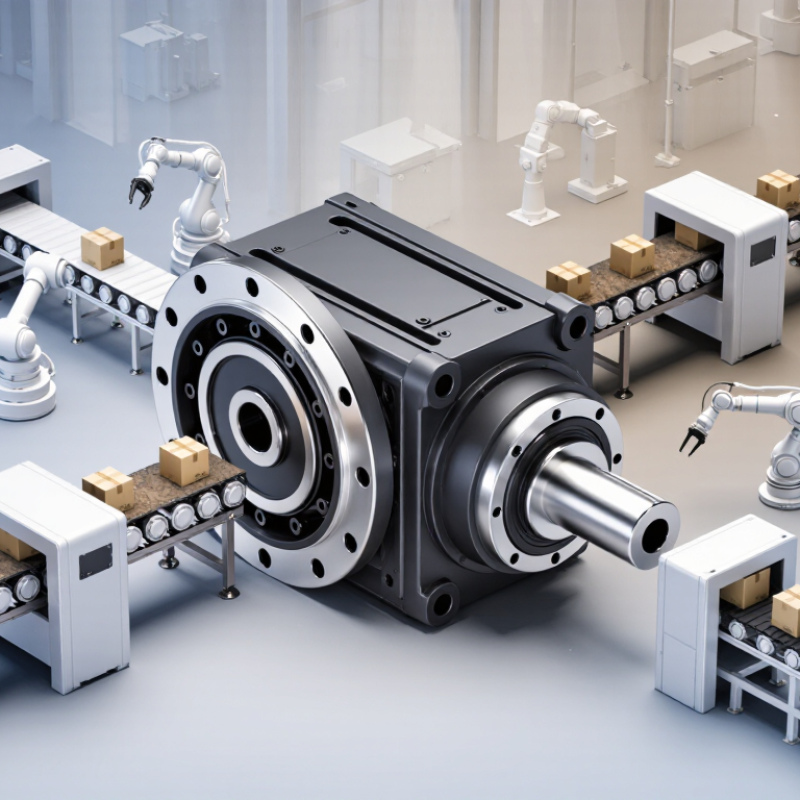
2026 Best Rotary Gearbox for Global Buyers?

Rotary Gearbox Fundamentals: Types, Ratios, Torque, and Speed Ranges

Rotary gearboxes transfer motor power into controlled rotary motion.

Common types include planetary, worm, bevel, and helical designs. Planetary gearboxes offer high torque in compact frames. Worm gearboxes provide strong reduction and, in some cases, useful holding resistance. Bevel and helical units often support efficient right-angle or inline transmission.

The gear ratio determines the balance between speed and torque. A 10:1 ratio can reduce a 1,500 rpm motor to approximately 150 rpm, before practical losses. Output torque depends on motor power, ratio, efficiency, and service factor. Check continuous and peak torque separately. A gearbox rated for 500 Nm may not tolerate repeated shock loads.

Speed ranges also matter. Some applications need slow movement below 20 rpm, while indexing systems may require several hundred rpm. I have seen buyers select by torque alone. That decision often creates heat, noise, or premature wear.

Tips: Measure the real load cycle, not only the average load. Confirm backlash, mounting direction, shaft size, lubrication, and ambient temperature. Request tested efficiency and rated-life data. Leave thermal margin. Too much margin, however, can increase cost and weight without improving performance. A careful comparison should include duty cycle, noise limits, maintenance access, and regional service capability. Performance claims deserve verification through drawings, test reports, and clear operating conditions.

Sizing by Load: Service Factors, Duty Cycles, and ISO 6336 Gear Ratings

Sizing a rotary gearbox begins with load, not catalogue ratio. Calculate output torque with T = 9,550P/n, using kilowatts and revolutions per minute. Then apply the service factor for shock, starts, reversals, and operating hours. A conveyor running eight hours steadily differs greatly from a crusher facing sudden impacts. Small detail, large consequence.

ISO 6336-1 and ISO 6336-2 require gear capacity checks for bending and contact stress. The rating should reflect actual speed, torque, lubrication, and reliability requirements. The ISO 6336-6 method also evaluates gear strength under variable loads. Do not use peak torque alone. A 2.5-times starting torque can overload a gearbox designed around average power. In practice, I have seen selections fail because duty cycles were described as “continuous” without counting starts per hour.

The U.S. Department of Energy’s Motor Systems Market Assessment reports that motor-driven systems consume about 23% of total U.S. electricity. That figure underlines why efficiency and correct loading matter beyond purchase price. For global buyers, request documented ISO 6336 calculations, thermal limits, and duty-cycle assumptions. Check ambient temperature, mounting position, and backstop requirements. A gearbox may pass the rating sheet yet run hot in a dusty 45°C enclosure. That is an uncomfortable gap.

2026 Best Rotary Gearbox for Global Buyers? Sizing by Load

Preliminary service-factor guidance by duty cycle, with ISO 6336 rating considerations

How to read this chart: The service factors shown are representative preliminary selection values used to increase nominal gearbox torque for different load conditions. Uniform continuous loads typically start near 1.00, while frequent shock, reversing, or highly variable loads require a higher design multiplier. Final gearbox selection should verify ISO 6336 pitting and tooth-root bending safety factors using the actual torque spectrum, speed, operating hours, lubrication, temperature, and required duty cycle.

Efficiency Benchmarks: Comparing Helical, Planetary, and Worm Designs

2026 Best Rotary Gearbox for Global Buyers?
Efficiency Benchmarks: Comparing Helical, Planetary, and Worm Designs

Efficiency depends on more than the gearbox label. Helical units commonly deliver 94–98% efficiency under stable loads. Their angled teeth support smooth torque transfer and moderate noise. Planetary gearboxes often reach 95–98%, especially in compact, high-torque equipment. Their shared load paths improve capacity, but alignment must be precise. A small installation error can create heat and uneven wear.

Worm gearboxes usually range from 50–90% efficiency, depending on the ratio, lubricant, speed, and load. High reduction ratios generate more sliding friction. That makes them useful for controlled motion and self-locking applications. However, the self-locking claim needs testing. Vibration, back-driving forces, and oil temperature can change real performance. A cool workshop test may not represent a dusty production line.

Field checks should record input speed, output torque, operating temperature, and duty cycle. Engineers should compare measured power, not catalogue figures alone. For example, a helical gearbox may suit a conveyor running continuously at 1,500 rpm. A planetary design may perform better where space is limited and shock loads occur. A worm unit may reduce purchase cost, yet consume more energy over years. My practical concern is simple: buyers often compare peak efficiency while ignoring service access and lubrication discipline. That shortcut can distort the final choice.

2026 Best Rotary Gearbox for Global Buyers? - Efficiency Benchmarks: Comparing Helical, Planetary, and Worm Designs

Gearbox Design Typical Mechanical Efficiency Typical Single-Stage Ratio Common Overall Ratio Range Torque Density Backlash Potential Thermal Performance Self-Locking Capability Best-Fit Applications
Helical 94%–98% Approximately 3:1–8:1 Approximately 3:1–100:1 through multiple stages Medium to high Low to medium; precision versions can be lower Good continuous-duty capability with suitable lubrication Generally no Conveyors, mixers, pumps, fans, material-handling equipment, and general industrial rotary drives
Planetary 95%–98% per stage Approximately 3:1–10:1 Approximately 3:1–10,000:1, depending on stage arrangement High to very high Low; precision configurations can provide very low backlash Very good torque-to-volume ratio; heat removal may be important at high speed Generally no Robotics, servo systems, machine tools, automation, mobile equipment, and high-load compact drives
Worm 50%–90% Approximately 5:1–100:1 Approximately 5:1–3,600:1 through multiple stages Medium Medium to high; clearance can increase with wear Lower at high ratios and high duty cycles because sliding generates more heat Possible at selected ratios and lead angles; must be verified for the specific load and orientation Low-speed rotary positioning, lifts, gates, packaging equipment, and applications needing a compact right-angle layout
Benchmark notes:
  • Efficiency values are representative engineering ranges for properly lubricated gearboxes operating near rated load and speed. Actual performance varies with ratio, input speed, temperature, seals, lubrication, manufacturing quality, and operating duty.
  • Worm efficiency is highly dependent on the lead angle and sliding conditions. Self-locking is not guaranteed and should not replace a dedicated brake or holding device where safety is involved.
  • Planetary gearboxes generally provide the highest torque density and lowest backlash potential, while helical gearboxes often offer an efficient and economical solution for continuous industrial duty.
  • For global procurement, compare the complete operating point rather than efficiency alone: output torque, service factor, permissible radial and axial loads, duty cycle, ambient temperature, ingress protection, maintenance requirements, and applicable conformity requirements.

Global Compliance: AGMA, ISO 9001, CE, and IEC 60034 Requirements

2026 Best Rotary Gearbox for Global Buyers?

A rotary gearbox should be evaluated beyond torque, ratio, and price. The U.S. Department of Energy reports that motor systems consume about 70% of industrial electricity. Efficiency evidence matters. Ask for load-test records, lubrication details, and documented gear-rating calculations.

AGMA methods help verify tooth strength, service factors, and gearbox durability. ISO 9001 shows that the supplier controls design, purchasing, inspection, and corrective actions. It does not guarantee perfect products. I have seen certificates accepted while inspection records remained incomplete. That gap deserves attention.

CE compliance depends on the complete machine and applicable European requirements. A gearbox with an integrated motor may involve machinery, EMC, and low-voltage obligations. IEC 60034 provides important motor requirements, including performance, temperature rise, and testing principles. The standard does not certify every gearbox component. Check the motor nameplate, test report, and declaration of conformity together. Small details matter.

The IEA 4E Electric Motor Systems Annex identifies motor-driven systems as major global electricity users. Therefore, buyers should compare measured efficiency, not only catalogue claims. Request traceable serial numbers, material certificates, noise data, and final inspection results. Keep the evidence. A lower-cost unit may become expensive when documentation, customs checks, or field repairs are added. Compliance is not paperwork alone. It is an operating discipline.

2026 Buyer Scorecard: Cost, Lead Time, Warranty, and Total Ownership Value

2026 Best Rotary Gearbox for Global Buyers?
2026 Buyer Scorecard: Cost, Lead Time, Warranty, and Total Ownership Value

A practical buyer scorecard should measure more than the purchase price. Request comparable quotes with gearbox size, ratio, materials, lubrication, testing, and packaging clearly listed. A low quote can still be the wrong answer. Freight, import handling, installation, and spare parts may change the final cost.

Lead time deserves written evidence. Ask for production days, inspection timing, shipping estimates, and delay procedures. Confirm whether critical components are stocked or made after payment. A realistic schedule is more useful than an attractive promise. Still, forecasts can fail. Build a small buffer before the gearbox reaches your maintenance team.

Warranty terms need careful reading. Check coverage length, excluded operating conditions, claim documents, response time, and replacement responsibilities. Also ask how technical support works across time zones. Total ownership value includes energy use, oil changes, seal replacement, downtime, and expected service life. Record each answer in a weighted scorecard. For example, cost might receive 30 percent, lead time 20 percent, warranty 20 percent, and operating value 30 percent. My own scoring method would not fit every plant. Heavy-duty service may justify a higher upfront cost. That choice should follow measured load data, not optimism. A gearbox that runs quietly during testing may behave differently under dust, shock loads, or poor alignment. Require test records and installation guidance before approval.

FAQS

What does a rotary gearbox do?

It converts motor power into controlled rotary motion. It can reduce speed, increase torque, or change shaft direction. The best choice depends on the load, space, and operating cycle.

How does a gear ratio affect speed and torque?

A 10:1 ratio can reduce 1,500 rpm to about 150 rpm. Practical losses reduce the final result slightly. Higher reduction usually provides more output torque, but speed decreases.

Which gearbox type suits compact, high-torque equipment?

A planetary design often provides high torque in a compact housing. Shared load paths improve capacity. Precise alignment remains essential.Small errors matter.

When might a helical gearbox be suitable?

Helical units often support efficient inline transmission. They commonly achieve about 94–98% efficiency under stable loads. They may suit a conveyor running continuously near 1,500 rpm.

What are the limitations of worm gearboxes?

Worm gearboxes can provide strong speed reduction and controlled motion. Their efficiency may range from 50–90%. Sliding friction can create heat and higher energy use.Do not assume self-locking.

How should buyers check gearbox torque capacity?

Separate continuous torque from peak torque. A gearbox rated for 500 Nm may not tolerate repeated shock loads. Measure the real load cycle, including starts, stops, and sudden impacts.Average load can mislead.

What installation details require confirmation?

Confirm backlash, mounting direction, shaft size, lubrication, and ambient temperature. Check alignment carefully before operation. Poor alignment can cause noise, heat, and uneven wear.

How can buyers compare total ownership value?

Include purchase cost, freight, installation, energy use, oil changes, seals, spare parts, and downtime. A cheaper gearbox may cost more over several years. I might overvalue upfront price without complete maintenance data.

What information should suppliers provide before approval?

Request drawings, efficiency tests, rated-life data, inspection records, and operating conditions. Confirm lead time, warranty exclusions, support response, and replacement duties. Add a small schedule buffer because forecasts sometimes fail.

Conclusion

Choosing the right Rotary Gearbox in 2026 requires more than comparing purchase prices. Buyers should first understand gearbox types, gear ratios, torque capacity, and speed ranges, then size the unit according to actual load conditions, duty cycles, service factors, and applicable ISO 6336 gear-rating principles. Helical, planetary, and worm designs each offer different balances of efficiency, compactness, noise control, starting torque, and maintenance requirements, making application-specific evaluation essential.

For global purchasing, compliance and documentation are equally important. A dependable supplier should demonstrate suitable quality-management practices and provide products aligned with relevant AGMA, ISO 9001, CE, and IEC 60034 expectations where applicable. The 2026 buyer scorecard should compare total ownership value, including upfront cost, energy efficiency, delivery lead time, warranty coverage, spare-parts access, installation support, and expected service life. A well-matched Rotary Gearbox can improve operational reliability while reducing long-term downtime and maintenance expenses.

Henry

Henry

Henry is a dedicated marketing professional with a profound expertise in the company's offerings. With years of experience in the industry, he possesses an impressive understanding of the market dynamics and consumer behaviors that drive success. Henry is committed to sharing his insights through......