Choosing the right Electric Gear Motor in 2026 requires more than comparing price, torque, and delivery time. Global buyers must examine application conditions, supplier quality, certification, and long-term operating costs. A motor driving a conveyor in a dusty warehouse faces different demands from one controlling a medical pump or robotic joint. Small details matter.
This guide introduces the leading electric gear motor types available to international buyers, including spur, helical, worm, planetary, bevel, and cycloidal designs. Each type offers a different balance of efficiency, noise, backlash, torque density, speed reduction, and maintenance needs. Helical gear motors often support efficient continuous motion, while worm gear motors can provide compact layouts and useful self-locking behavior in selected applications. Planetary models deliver high torque in limited spaces, but their purchase price may be higher.
Real-world selection is rarely perfect. A catalog rating may not match heat, dust, shock loads, or frequent reversals in the field. I have seen buyers focus on rated power while overlooking starting torque and duty cycle. That mistake can shorten service life. This overview uses practical engineering considerations, manufacturer documentation, and common international purchasing requirements to support clearer decisions. Buyers should still verify test reports, ingress protection, insulation class, gearbox materials, warranty terms, and local voltage compatibility. Check the details. A reliable motor is not simply powerful; it must remain stable, serviceable, and suitable for the machine’s actual working environment.
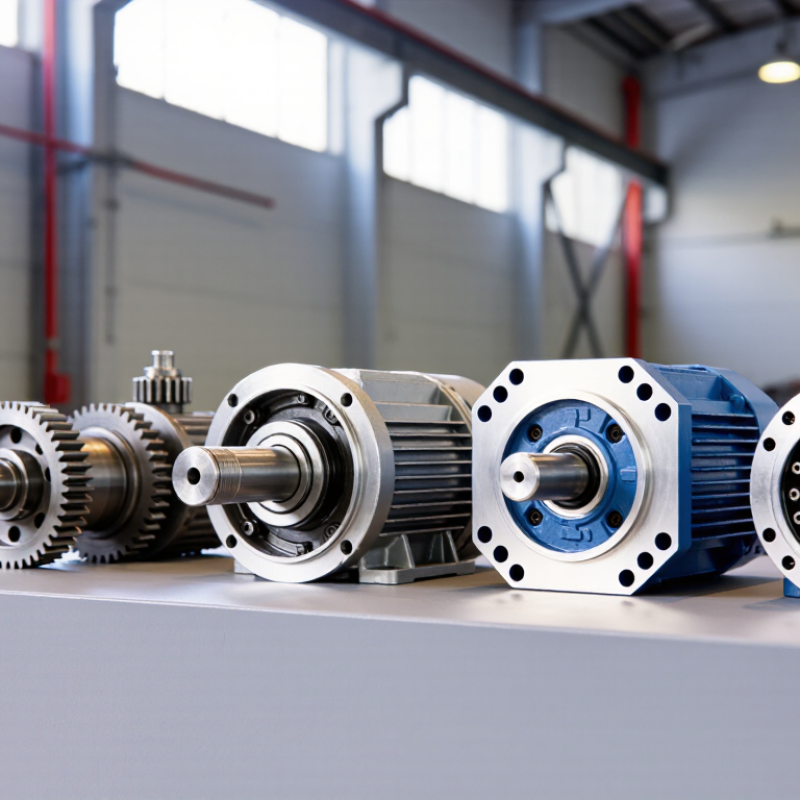
Electric gear motors combine an electric motor with a gearbox. The motor creates rotational speed, while the gearbox trades speed for torque. A simple ratio explains the change: a 20:1 reducer can cut output speed dramatically, though real torque is lower than the ideal calculation. Gear friction, heat, and seal losses matter. The International Energy Agency reports that motor systems consume around 50% of global electricity, making efficiency a serious purchasing factor.
Common designs include helical, worm, bevel, and planetary gear motors. Helical units usually offer strong efficiency and smooth operation. Worm gears provide compact reduction but can generate more heat. Planetary systems deliver high torque in a small housing. Buyers should match rated torque, service factor, duty cycle, mounting position, and ambient temperature. IEC 60034 guidance supports consistent motor performance testing, but field conditions can still change results.
Operating principles are easy to describe, yet selection is rarely perfect. A conveyor starting under load needs starting torque, not only attractive catalog speed. Oversizing may reduce efficiency and increase cost. Undersizing can cause overheating, noise, and early bearing wear. The U.S. Department of Energy’s Motor Systems Market Assessment estimates motor-driven equipment uses about 68% of industrial electricity. That figure deserves practical attention. In my view, many purchasing decisions still focus too heavily on purchase price, while lubrication access and thermal behavior receive too little scrutiny.
| Gear Motor Type | Basic Operating Principle | Typical Gear Ratio Range | Typical Efficiency | Torque and Speed Characteristics | Main Advantages | Common Limitations | Typical Applications | Buyer Selection Priorities |
|---|---|---|---|---|---|---|---|---|
| Spur Gear Motor | Parallel, straight-cut gears transfer motion directly between the motor shaft and output shaft. | Approximately 3:1 to 100:1 in multistage designs | About 75%–94%, depending on stages, lubrication, and load | Moderate torque; suitable for low to medium output speeds and intermittent or continuous duty. | Simple construction, compact size, low cost, and easy maintenance. | Higher noise and vibration than helical gearing; limited tolerance for shock loads. | Small conveyors, vending equipment, feeders, medical devices, and light automation. | Low purchase cost, compact dimensions, duty cycle, noise level, and output speed. |
| Helical Gear Motor | Angled teeth engage gradually, creating smoother and quieter power transmission than straight-cut gears. | Approximately 3:1 to 300:1 in multistage configurations | About 90%–97% per gear stage under suitable operating conditions | High continuous torque, stable speed reduction, and good performance under moderate shock loads. | Quiet operation, high efficiency, good load capacity, and long service life. | Produces axial thrust, generally costs more than spur gearing, and requires accurate alignment. | Conveyors, packaging lines, mixers, material-handling systems, and process machinery. | Required torque, continuous-duty rating, noise limits, thermal capacity, and mounting position. |
| Helical-Bevel Gear Motor | Helical stages provide efficient reduction, while bevel gearing redirects power through approximately 90 degrees. | Approximately 3:1 to 400:1 | About 90%–96% overall, depending on the number of stages | High output torque with right-angle output and good continuous-duty capability. | Efficient, durable, space-saving, and suitable for heavy industrial loads. | Higher weight, price, and installation complexity than simple spur or helical units. | Industrial conveyors, elevators, palletizers, warehouse systems, and production equipment. | Right-angle layout, radial and axial loads, service factor, brake requirements, and protection rating. |
| Worm Gear Motor | A worm screw drives a toothed wheel, usually transferring motion through a 90-degree axis arrangement. | Approximately 5:1 to 100:1 per stage | About 50%–90%, strongly influenced by ratio, helix angle, lubrication, and load | High reduction in a compact package; low output speed and high starting torque are available. | Compact right-angle design, low cost, smooth operation, and potential self-locking at selected ratios. | Lower efficiency, heat generation, and sliding wear compared with helical or planetary systems. | Gates, lifts, small conveyors, positioning systems, valves, and adjustable equipment. | Efficiency target, backdriving behavior, thermal limits, duty cycle, lubrication, and shock loads. |
| Planetary Gear Motor | Several planet gears share the load between a sun gear and an internal ring gear, creating high torque density. | Approximately 3:1 to 10,000:1 through multiple stages | About 90%–98% per stage, depending on design and operating conditions | Very high torque for its size, low backlash options, and stable performance at varying speeds. | Excellent torque density, high efficiency, rigidity, and balanced load distribution. | Higher cost, more complex manufacturing, and greater sensitivity to lubrication and precision requirements. | Robotics, servo systems, machine tools, mobile equipment, automation, and high-load drives. | Backlash, peak torque, torsional stiffness, duty cycle, thermal rating, and allowable radial load. |
| Cycloidal Gear Motor | An eccentric bearing drives a cycloidal disc against pins, distributing load across multiple contact points. | Approximately 6:1 to 119:1 per stage | About 80%–95%, depending on ratio, size, and lubrication | Very high shock-load capacity, high starting torque, and low backlash in precision designs. | Strong resistance to impact, compact high-ratio reduction, and long service life in demanding duty. | May have greater vibration, eccentric motion, weight, and cost than conventional helical units. | Robotic joints, hoists, indexing tables, heavy-duty conveyors, and precision positioning systems. | Shock load, peak torque, backlash, vibration tolerance, maintenance access, and mounting orientation. |
| Hypoid Gear Motor | Offset spiral gears mesh at a right angle, combining smooth tooth engagement with compact power transmission. | Approximately 5:1 to 200:1 | About 85%–95%, depending on ratio and operating conditions | High torque density, quiet operation, and efficient right-angle power transfer. | Compact offset design, low noise, smooth running, and good load capacity. | Sliding tooth contact creates heat and requires suitable extreme-pressure lubricant and accurate setup. | Compact conveyors, automated machinery, vehicle auxiliaries, and space-constrained drive systems. | Lubricant specification, thermal performance, noise level, output orientation, and allowable loads. |
| Right-Angle Bevel Gear Motor | Bevel gears with conical tooth surfaces change the direction of rotation, commonly by 90 degrees. | Approximately 2:1 to 100:1, often combined with helical stages | About 90%–97% in properly designed multistage units | High output torque with efficient direction change and reliable continuous operation. | Efficient right-angle transmission, robust construction, and flexible installation. | Requires accurate shaft alignment and may generate axial loads that require suitable bearings. | Conveyors, packaging machines, food-processing equipment, and compact automation systems. | Shaft arrangement, mounting position, load direction, hygiene requirements, and service factor. |
Helical gear motors often suit conveyors with steady loads and continuous operation. They usually provide good efficiency and compact installation. Test it warm.
Planetary designs work well where high torque and limited space matter. They can support compact packaging machinery and demanding acceleration. Space changes everything.
Compare starting torque, peak torque, duty cycle, and overload capacity. A packaging axis may accelerate repeatedly, unlike a steady conveyor. Rated torque alone misleads.
The ratio affects output speed, torque, heat, and application suitability. Select it with the real load profile, not the motor nameplate alone. Small choices matter.
Worm gears may reduce purchase cost, but sliding contact can create more heat. Their efficiency may be lower during extended operation. Cheap can become expensive.
Run the complete motor and gearbox continuously, then measure housing temperature. Check inside dusty cabinets, where airflow may be restricted. Test it warm.
Request efficiency data, thermal limits, noise results, test conditions, and traceability records. Also verify voltage, frequency, corrosion protection, and serial-number matching. Paperwork is not proof.
No. Certificates support applicable market requirements, but they do not prove every field result. A controlled quality process also cannot replace product testing. Field evidence matters.
Compare energy use, maintenance access, spare gears, service skills, and expected operating hours. A small efficiency difference can become costly over ten years. Purchase price is incomplete.
Yes. Test a sample under realistic load, temperature, speed, and duty cycles. Inspect wiring, sealing, noise, backlash, and temperature changes. No checklist is perfect.
This guide explains the fundamentals and operating principles of the Electric Gear Motor, including how electrical energy is converted into controlled mechanical motion through motor and gearbox interaction. It compares major types, such as helical, worm, planetary, bevel, and parallel-shaft designs, highlighting differences in efficiency, torque capacity, speed reduction, noise, size, and maintenance requirements. Readers will also learn how to evaluate performance factors including rated power, output torque, duty cycle, protection level, thermal management, operating speed, and service life.
For global industrial applications, selecting the right Electric Gear Motor requires careful consideration of load characteristics, installation space, environmental conditions, voltage compatibility, control systems, and total operating cost. The guide also outlines important buyer considerations, including product documentation, quality management, electrical safety, energy efficiency, testing procedures, certifications, export requirements, lead times, customization, spare parts, and after-sales support. These criteria help international buyers make reliable, compliant, and cost-effective sourcing decisions.

 Divistechs Gear Motor