Choosing the right Chain Drive System begins with understanding the machine, not just its horsepower. A conveyor moving steadily through a clean workshop has different needs from a mixer facing sudden starts, dust, and frequent load changes. Record the required speed, transmitted power, operating hours, and peak loads before comparing chain types. Small details matter. Sprocket size and shaft spacing affect speed, fit, and available clearance.
Next, consider the working environment and maintenance routine. Moisture, abrasive particles, temperature, and limited access can influence material choice, lubrication, and service life. A suitable chain may still wear quickly if sprockets are misaligned or tension is set poorly. Check manufacturer ratings and installation guidance, then verify that the selected drive fits the actual duty cycle. Do not rely on a catalog number alone. That sounds simple, but it is often overlooked.
This guide explains the practical factors behind chain selection, from load and speed to lubrication, alignment, and inspection. It also highlights trade-offs between compact design, efficiency, durability, and maintenance effort. The best option is not always the strongest or most expensive one. It is the system that performs reliably under real operating conditions and can be inspected without guesswork. No selection table can capture every machine’s quirks, so leave room to review assumptions before ordering. A careful choice can reduce avoidable wear, downtime, and replacement costs.
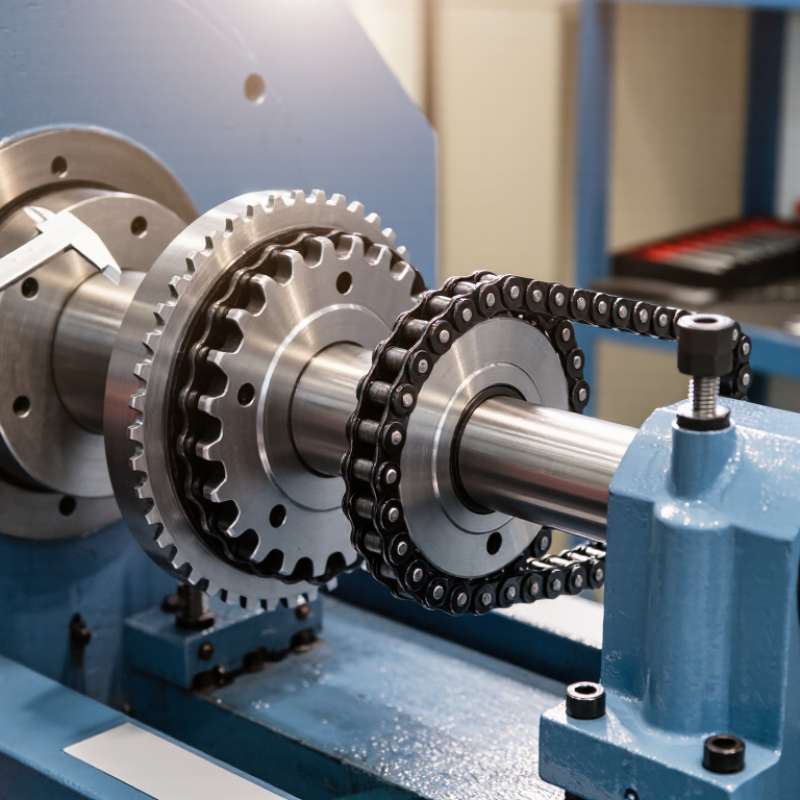
How to Choose the Right Chain Drive System?
Define Load, Speed, and Duty Cycle Using ANSI/ASME B29.1 Ratings
Start with the load the chain must move, not just the motor’s nameplate power. Record steady load, startup force, and possible shock from jams or uneven feeding. A chain carrying boxes gently may need a different selection from one starting a loaded conveyor repeatedly. That matters.
Use ANSI/ASME B29.1 to identify roller-chain dimensions and series. The standard helps confirm pitch and compatibility, but dimensions alone do not establish a safe system capacity. Compare the required load and speed with documented chain ratings, then account for lubrication, sprocket size, alignment, and operating conditions. Do not guess. A small sprocket running quickly can increase wear and reduce service life.
Define duty cycle in practical terms: hours per shift, starts per hour, and time spent under heavy load. Frequent starts or reversing motion may call for extra capacity beyond a steady-load calculation. In practice, a neat spreadsheet can still miss a jammed conveyor or poor lubrication. Recheck assumptions against the actual machine, and leave room for the occasional overload. That margin is easy to overlook. Use a qualified engineer when loads, speeds, or consequences of failure are uncertain.
A chain drive choice starts with measured duty, not a catalog’s largest number. Record transmitted power, driver speed, driven speed, daily operating hours, and start-stop frequency. Add an appropriate service factor for shock loads or frequent starts, using a recognized engineering reference. ISO 606 helps confirm roller-chain pitch, width, roller diameter, and sprocket compatibility. Pitch is the center-to-center distance between adjacent pins. That distinction matters.
Use the design power and chain speed to compare candidate sizes with published power-capacity data. Check the table’s assumptions about lubrication, sprocket tooth count, and operating conditions before choosing. A chain may pass a power check yet wear quickly with poor lubrication or abrasive dust. Review tooth count, shaft spacing, alignment, and available guarding space, too. Small details count. Real installations are rarely as tidy as a spreadsheet suggests. If the duty cycle is uncertain, document actual conditions, retain a practical margin, and have the selection checked by a qualified engineer.
How to Choose the Right Chain Drive System?
Match Sprocket Teeth, Speed Ratio, and Chain Speed Below 15 m/s
Start with the required output speed, then choose sprocket teeth to create the needed ratio. For a reduction drive, the driven sprocket usually has more teeth than the driver. A 20-tooth driver turning at 900 rpm with a 40-tooth driven sprocket produces roughly 450 rpm, before considering losses. Check the actual tooth counts and shaft speeds, not just the nominal ratio. Small sprockets can increase chain articulation and wear, so avoid choosing teeth based only on compactness.
Tips: Calculate chain speed using pitch × teeth × rpm ÷ 60,000, with pitch in millimeters. Keep it below 15 m/s, and check the chain and sprocket maker’s limits. Measure under load. Alignment matters.
Chain speed affects noise, lubrication needs, and wear. For example, a 12.7 mm pitch chain on a 20-tooth sprocket at 900 rpm runs at about 3.8 m/s. That is below the stated threshold, but it does not prove the drive is suitable: load, starts, shocks, and operating hours still matter. Leave a sensible margin below 15 m/s, especially when speed fluctuates. One trade-off is easy to miss: a larger sprocket may reduce chain wear but need more space. Recheck the layout, tension, and lubrication plan before finalizing the selection.
A chain drive should be sized for the load it actually sees, not just the motor’s nameplate power. ISO 10823:2004 provides guidance for selecting roller chains under different operating conditions. In common engineering selection charts, moderate shock may use a service factor near 1.3, while heavy shock may approach 1.5. These are screening values, not universal rules. A conveyor carrying uneven bins may need more allowance than a steady fan. Shock changes everything. Repeated starts, jams, and reversing loads can also raise peak tension. I would check the driven machine’s load pattern before choosing a chain; a neat spreadsheet can still miss a sticky transfer point.
Lubrication and surroundings matter just as much. ISO 10823 selection guidance considers operating conditions, including the lubrication needed for reliable service. Match the lubrication method to chain speed and load, then verify it reaches the pin-and-bushing joints. A dry joint may look harmless while wear quietly lengthens the chain. Oil matters. Dust, washdown, heat, and misalignment can undermine a carefully chosen service factor. Record temperature, operating hours, starts per hour, and visible contamination during a real shift. I have seen estimates change after observing one full production cycle; the first inspection is not always representative.
Apply service factors for shock loads, lubrication, and operating conditions.
Typical screening factors are 1.0 for uniform loading, 1.3 for moderate shock, and 1.5 for heavy shock. Multiply the required power by the applicable factor when selecting a drive. These are general reference values, not universal ratings: confirm them against the chain manufacturer’s guidance. Poor lubrication, temperature extremes, and contamination can reduce service life and may require a different chain, lubrication method, or maintenance interval.
How to Choose the Right Chain Drive System?
Verify efficiency, alignment, and wear limits before selecting a chain drive. Industry engineering guidance commonly places a properly sized and lubricated roller-chain drive near 98% efficiency. Treat that figure as a benchmark, not a promise: poor lubrication, excessive tension, or worn sprocket teeth can increase losses. Check the duty cycle, speed, load, and operating temperature against the chain’s rated capacity. ISO 606 provides dimensional requirements for roller chains and sprockets, helping confirm component compatibility.
Alignment deserves a physical check. Place a straightedge across the sprocket faces; gaps or uneven contact can signal shaft misalignment. Listen for a repeating click, and inspect for polished side plates or hooked teeth. These clues may point to uneven wear. Many industry maintenance guides use 3% chain elongation as a general replacement limit, with tighter limits—often around 1.5%—for precision or restricted-center-distance drives. Measure several links under light tension; one reading can mislead.
Tips: Keep a simple log of elongation, lubricant condition, and inspection dates. Clean before measuring. A quick visual check is useful, but it misses gradual stretch. Recheck after the first operating period; setup errors sometimes appear only after the chain settles.
Record the steady load, startup force, and possible shock from jams or uneven feeding. Motor power alone is not enough.
It helps identify chain dimensions, series, and pitch. Matching dimensions does not prove the system can safely carry the load.
Compare the required load and speed with documented chain ratings. A small, fast sprocket can increase wear and shorten service life.
Note hours per shift, starts per hour, and time under heavy load. Reversing motion and frequent starts may require extra capacity.
Consider one when loads include repeated starts, jams, or shocks. Screening values may be near 1.3 for moderate shock and 1.5 for heavy shock. Check the real load pattern; estimates can miss a sticky transfer point.
Match the lubrication method to chain speed and load. Confirm oil reaches the pin-and-bushing joints. A dry joint may look fine at first.
Check sprocket faces with a straightedge. Listen for repeating clicks and inspect for polished side plates or hooked teeth. Small clues matter.
Clean the chain, apply light tension, and measure several links. Around 3% elongation is a common replacement guideline; precision drives may need limits near 1.5%. One reading can mislead.
No. It is a benchmark for a properly sized, lubricated drive. Excessive tension, worn teeth, or poor lubrication can increase losses. Recheck after the chain settles.
Choosing the right Chain Drive System begins with a clear understanding of the load, operating speed, and duty cycle. Use applicable chain ratings to estimate the required capacity, then select a chain pitch and size that suit the power demand and operating conditions. Matching the chain to sprockets with an appropriate tooth count helps achieve the desired speed ratio while keeping chain speed below 15 m/s.
Before finalizing the selection, account for shock loads, lubrication quality, and the surrounding operating environment by applying suitable service factors. Check that the sprockets are aligned and that the drive can run efficiently under the expected load. Finally, compare the setup with recommended wear limits and plan for regular inspection, so the system can deliver reliable performance over its service life.

Divistechs Gear Motor