Choosing the right Compact Gearbox is rarely a matter of selecting the smallest available unit. It requires matching torque, speed, duty cycle, installation space, and operating environment. A gearbox that fits the drawing may still fail under heat, shock loads, or continuous reversing. That distinction matters.
Dr. Hermann J. Stadtfeld, a respected gear-technology specialist, has stated, “Gear design is always a compromise between load capacity, efficiency, noise, and cost.” His observation offers a useful starting point for Compact Gearbox selection. Engineers must examine more than the rated reduction ratio. They should check output torque at the actual motor speed, service factor, backlash, lubrication method, bearing capacity, and expected operating hours. A unit rated for 100 Nm may not safely deliver 100 Nm in a high-temperature, frequently cycling machine.
Real experience often reveals overlooked details. A gearbox mounted beside a dusty conveyor may need stronger sealing. A robotic joint may require low backlash and controlled thermal expansion. A small housing can save installation space, but it may also limit heat dissipation. That trade-off is easy to miss.
Do not trust one specification alone.
Reliable selection also depends on documentation, testing, and supplier support. Ask for load curves, efficiency data, noise values, permissible radial loads, and maintenance requirements. Check whether the published figures reflect continuous duty or short-term operation. This is where many purchasing decisions become imperfect. A lower price can look attractive, yet early wear may create greater downtime and replacement costs.
The best Compact Gearbox is not simply compact. It is appropriately sized, properly protected, and realistically evaluated against the machine’s daily demands.
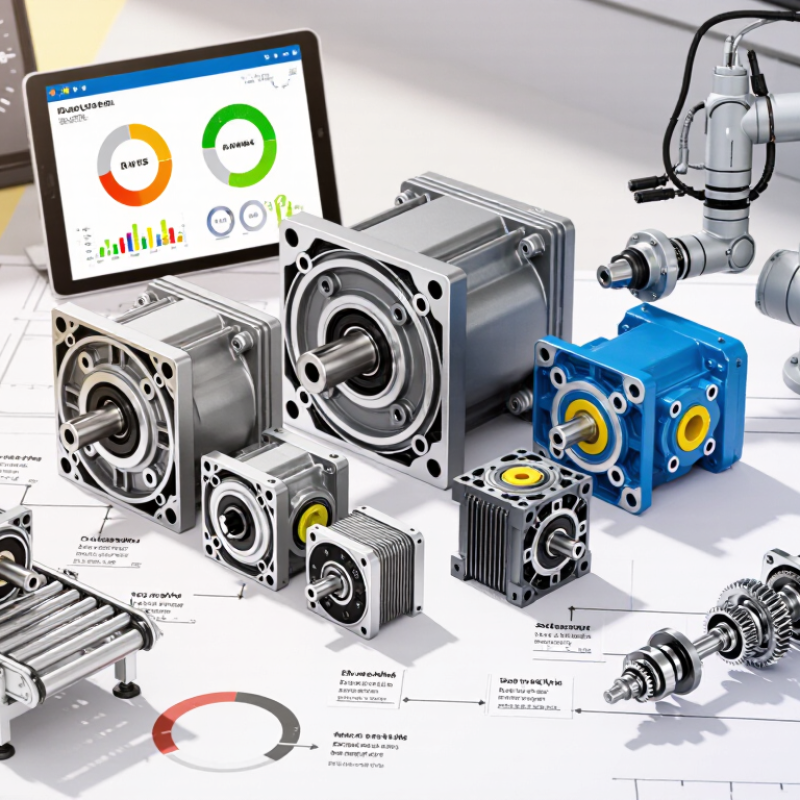
Define the Application Requirements for a Compact Gearbox
Choosing a compact gearbox starts with the application, not the available catalog size. Define required torque, speed, duty cycle, and installation space before comparing designs. Record the motor’s rated power and starting load. A conveyor moving filled trays may need high starting torque, even at modest running speed. Measure the real load, not an optimistic estimate. Include acceleration, stopping, and reversing conditions. These details often expose an undersized gearbox early.
Space constraints matter, but they should not control every decision. Note the mounting orientation, shaft direction, allowable overhang, and nearby heat sources. Check whether the gearbox can tolerate shock loads from jams or uneven products. For continuous operation, calculate thermal capacity rather than relying on torque alone. A small housing can look efficient. It may still run too hot. Ask for duty-cycle data, efficiency figures, backlash limits, and noise information from technically accountable suppliers. Independent test reports and clear datasheets are more useful than vague performance claims.
Material and environment complete the application definition. Specify dust, moisture, washdown exposure, ambient temperature, and maintenance access. In a dusty packaging area, sealed construction may reduce service interruptions. In a clean laboratory device, low noise and minimal lubricant migration may matter more. Select a realistic service factor, then challenge it. Is the factor based on measured impacts or habit? I have seen projects add generous margins but overlook shaft alignment. That mistake can shorten bearing life. Leave room for inspection, coupling adjustment, and future load changes before approving the compact gearbox.
Compare Gearbox Types and Select the Appropriate Configuration
Choosing a compact gearbox starts with comparing its operating behavior, not its size alone. Planetary gearboxes deliver high torque in a short housing and suit robotics, conveyors, and precise positioning. Spur gearboxes are simpler, efficient, and often easier to service, but they may create more noise and backlash. Worm gearboxes provide large speed reduction in limited space, although sliding contact can produce heat and reduce efficiency.
The configuration should match the machine’s real working cycle. Check output torque, input speed, duty duration, shock loads, mounting direction, and shaft alignment. A right-angle gearbox may solve a tight layout, while a parallel-shaft design can handle a direct transmission path. Helical teeth usually run more quietly than straight teeth. However, they can create axial forces that require stronger bearings. In field testing, temperature near the housing matters. A calculation may look correct, yet repeated starts can expose a weak thermal margin. I have seen compact units fail early because designers measured peak torque but ignored frequent reversing.
Tips:
Measure the available envelope first. Leave room for connectors and tools. Compare rated torque with service-factor requirements. Ask for backlash, efficiency, noise, and bearing-life data. Test the gearbox under the actual load pattern, not only a smooth laboratory load. If the application is still uncertain, document the assumption that most needs review.
Calculate Torque, Speed, Ratio, and Service Factor
Choosing a compact gearbox starts with numbers, not housing size. The IEA estimates that electric motor systems consume 43–46% of global electricity, so small efficiency losses can become expensive. Measure the motor’s rated power, input speed, and required output speed. Use T = 9550P/n, where T is torque in newton-metres, P is power in kilowatts, and n is revolutions per minute. For a 0.75 kW motor running at 1,450 rpm, input torque is about 4.9 Nm. A target speed of 60 rpm requires a ratio near 24:1. Real machinery is less tidy.
Allow for gearbox efficiency. At 90% efficiency, output torque is approximately 108 Nm. A conveyor with frequent starts, uneven loading, or reversing may require a service factor of 1.5. The selected gearbox should therefore handle at least 162 Nm continuously, before checking peak and starting torque. The U.S. Department of Energy’s Industrial Motor Systems Market Assessment reports that motor systems represented about 69% of industrial electricity use in the United States. Efficiency deserves attention.
AGMA rating practices and ISO 6336 calculations also require attention to tooth strength, bearing loads, lubrication, and operating temperature. Do not treat service factor as a perfect safety guarantee. I once saw a compact drive pass the torque calculation but fail during repeated starts because acceleration torque was ignored. A spreadsheet can look convincing. Check the duty cycle, radial load, mounting position, and actual ambient temperature before approving the ratio.
How to Choose the Right Compact Gearbox?
Compare calculated load torque with the design torque required after applying the service factor.
The gearbox should have a rated output torque at least equal to the design torque.
Torque is estimated using T = 9550 × P × η ÷ n, where T is torque in Nm,
P is motor power in kW, η is assumed gearbox efficiency, and n is output speed in rpm.
Output speed is calculated from motor speed divided by the transmission ratio.
The design torque equals calculated load torque multiplied by the service factor.
Evaluate Size, Materials, Efficiency, and Operating Environment
How to Choose the Right Compact Gearbox?
Evaluate Size, Materials, Efficiency, and Operating Environment
Choosing a compact gearbox starts with the available space, not the catalog photograph. Measure the mounting area, shaft height, and cable clearance carefully. A unit that fits on paper may block a nearby sensor or service panel. Small dimensions also reduce heat dissipation. That trade-off is easy to miss.
Match the gearbox to the real load, including starting torque and occasional shock loads. A continuous load of 8 Nm may require a higher rating if the machine starts repeatedly. Hardened steel gears usually handle demanding cycles well, while aluminum housings reduce weight. Polymer components can lower noise, but they may soften under elevated temperatures. Material selection needs evidence, not assumptions. Review test data, rated service life, and lubrication requirements from reliable technical documentation.
Efficiency affects both energy use and operating temperature. Compare efficiency at your actual speed and torque, rather than relying on a maximum figure. A compact gearbox operating at 85% efficiency can still create noticeable heat in a sealed enclosure. Check the ambient range, dust exposure, humidity, and cleaning methods. An appropriate ingress protection level can prevent premature wear, but it cannot correct poor installation. In practical testing, alignment often matters more than expected. Even a small shaft offset can increase noise and shorten bearing life. I have seen compact designs fail because space was measured once, then ignored during assembly. Recheck clearances after mounting. Safety margins should remain visible.
Verify Manufacturer Specifications, Compatibility, and Maintenance Needs
Choosing a compact gearbox begins with verified manufacturer specifications, not a catalog photograph. Check rated torque, peak torque, input speed, reduction ratio, backlash, efficiency, and service factor. A gearbox rated for 80 Nm may fail quickly if the machine repeatedly starts under heavy load. The U.S. Department of Energy reports that motor-driven systems use about 69% of industrial electricity in the United States. Efficiency therefore affects operating cost, not just performance.
Compatibility needs a physical and electrical review. Measure shaft diameter, keyway dimensions, mounting holes, allowable radial load, and available clearance around the housing. Confirm that the motor, coupling, lubricant, and gearbox input speed work together. In practical inspections, a few millimeters of misalignment can create noise, heat, and premature bearing wear. It is easy to overlook the mounting position. That mistake is costly.
Maintenance requirements should be specified before purchase. Ask for lubricant type, replacement intervals, sealing details, inspection points, and expected service life. ISO 10816 vibration guidance and ISO 20816 can support condition monitoring, although they do not replace the manufacturer’s limits. The European Commission’s Energy Efficiency Transformation report identifies motor systems as major industrial energy users, reinforcing the value of efficient transmission. My own selection process would still leave room for doubt: published efficiency may reflect ideal testing, not dusty, hot, intermittent operation. Verify with a sample test, temperature readings, and the actual duty cycle.
FAQS
A planetary gearbox can deliver high torque within a short housing. It suits robotics, conveyors, and precise positioning. Heat still needs checking.
Spur gearboxes are simple, efficient, and usually easy to service. They may produce more noise and backlash. Simple is not always best.
Worm gearboxes provide large speed reduction in limited space. Sliding contact can create heat and reduce efficiency. Check thermal performance carefully.
Check rated torque, peak torque, input speed, reduction ratio, backlash, efficiency, and service factor. A catalog image proves almost nothing.
Measure shaft diameter, keyway dimensions, mounting holes, and housing clearance. Confirm radial loads and shaft alignment. A few millimeters matter.
Repeated starts, reversing, and shock loads can exceed smooth laboratory conditions. Peak torque alone may hide thermal weakness. Test under actual loads.
Ask about lubricant type, replacement intervals, sealing details, inspection points, and expected service life. Dust and heat may shorten the interval.
Mounting direction can change lubrication behavior and connector access. Leave room for tools and cables. This detail is easy to miss.
Motor-driven systems consume substantial industrial electricity. Lower transmission losses can reduce operating expenses. Published efficiency may reflect ideal testing.
Document the weakest assumption and test it first. Measure housing temperature, vibration, noise, and backlash. Revise the selection if results disagree.
Conclusion
Choosing the right Compact Gearbox begins with a clear understanding of the application. Define the required load, operating speed, output torque, duty cycle, available space, motion direction, and installation position. Then compare suitable gearbox types and configurations, such as inline or right-angle designs, based on the equipment’s mechanical layout and performance needs. Accurate calculations for torque, speed, transmission ratio, and service factor are essential to ensure reliable operation and prevent premature failure.
Next, evaluate the gearbox’s dimensions, materials, efficiency, noise level, heat resistance, and suitability for the operating environment. Conditions such as dust, moisture, temperature changes, vibration, and continuous operation may significantly affect performance. Before making a final decision, verify the manufacturer’s specifications, shaft and mounting compatibility, lubrication requirements, inspection intervals, and replacement-part availability. A well-selected Compact Gearbox should provide the required power transmission while fitting the equipment efficiently, operating reliably, and supporting straightforward maintenance throughout its service life.

 Divistechs Gear Motor