Top Metal Pulley Types for Efficient Industrial Use?

Time:2026-06-12 Author:Isabella
0%

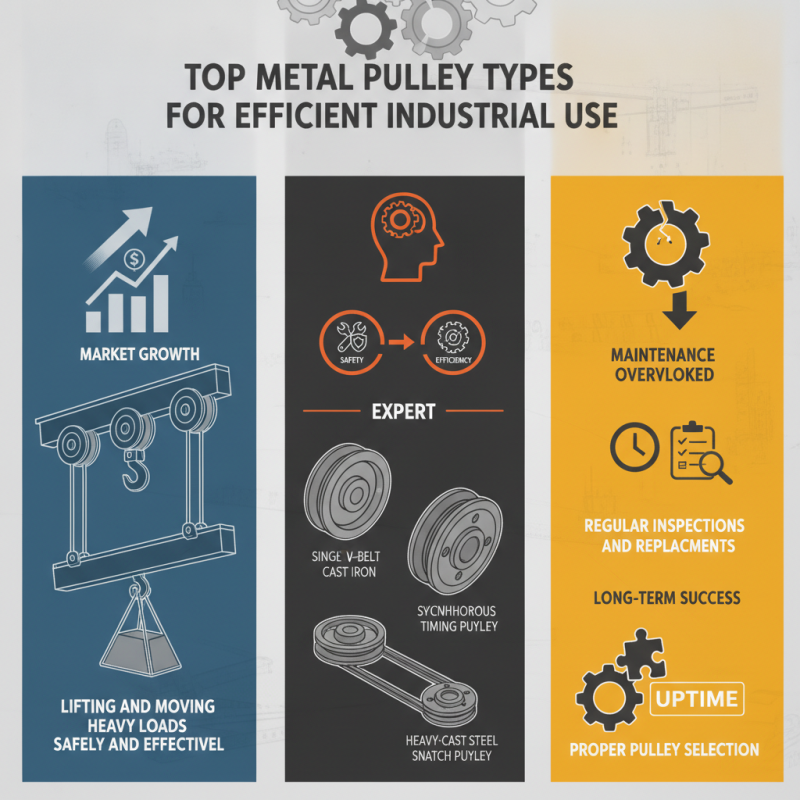
In industrial settings, the choice of equipment significantly impacts efficiency. Metal pulleys are essential components in many mechanical systems. According to a recent report by the Machinery Research Institute, the global market for metal pulleys is projected to reach $4 billion by 2025. This growth reflects their critical role in lifting and moving heavy loads safely and effectively.

Expert Brian Foster, a leading authority in mechanical design, emphasizes the importance of selecting the right metal pulley. He states, “Proper pulley selection can enhance both safety and efficiency in operations.” Metal pulleys come in various designs and materials, each suited for different applications. Choosing the appropriate type can prevent costly operational failures.

Despite their advantages, companies often overlook proper maintenance of metal pulleys. Regular inspections and replacements are necessary to ensure optimal performance. Ignoring these can lead to breakdowns. In an industry that values precision, understanding different metal pulley types is paramount for achieving long-term success.
Top Metal Pulley Types for Efficient Industrial Use?

Understanding Metal Pulley Basics in Industrial Applications

In industrial settings, understanding the basics of metal pulleys is crucial for optimizing performance. Pulleys are vital for transmitting power and motion. They reduce friction and wear, significantly enhancing operational efficiency. A study by the Industrial Mechanisms Journal shows that using high-quality pulleys can improve system efficiency by up to 30%.

The design of metal pulleys varies widely. Each type serves specific applications. For instance, V-belt pulleys are common in factories. They handle heavy loads effectively. Flat pulleys, on the other hand, excel in applications requiring speed. These variations highlight the importance of selecting the right pulley type for different tasks. Selecting the wrong type can lead to increased wear, operational delays, and higher maintenance costs.

Many industries underestimate the value of proper pulley maintenance. Regular inspections can extend lifespan and efficiency. According to the Machinery Maintenance Report, 40% of pulley failures are attributed to lack of maintenance. Adopting a proactive approach can prevent equipment failure. Ultimately, metal pulleys are indispensable tools in industrial applications. Understanding their basics ensures higher reliability and productivity.

Different Types of Metal Pulleys and Their Features

When choosing metal pulleys for industrial applications, the variety available can greatly affect efficiency. One common type is the V-belt pulley. This design facilitates superior grip due to its angled grooves. Research indicates that V-belt drives typically transfer approximately 90% of the input power efficiently. However, wear on the belts can lead to inefficiencies over time, necessitating regular maintenance checks.

Another popular type is the flat pulley. Flat pulleys work effectively with flat belts and are often preferred in applications requiring stability. These systems are generally more straightforward to install and adjust. However, they might not offer the same power transmission efficiency as their V-belt counterparts. A study highlighted that flat belt drives can achieve about 80% efficiency, which can vary greatly depending on the application and load.

Sheaves and blocks are also significant in industrial settings. These pulleys are often used for lifting or moving heavy loads. They can provide mechanical advantage, simplifying tasks. However, the complexity of setups using sheaves can sometimes lead to misalignment issues, which could reduce overall operational efficiency. Proper installation and alignment are crucial to mitigating these risks.

Top Metal Pulley Types for Efficient Industrial Use

Pulley Type Material Load Capacity Features
Fixed Pulley Steel Up to 2000 lbs Simple design, easy to install, provides mechanical advantage.
Movable Pulley Aluminum Up to 1500 lbs Increases lifting efficiency, reduces force needed to lift weight.
Compound Pulley Stainless Steel Up to 3000 lbs Combines fixed and movable pulleys for maximum mechanical advantage.
Jockey Pulley Cast Iron Varies by application Used for tensioning belts in machinery, improves efficiency.
V-Belt Pulley Steel Up to 2500 lbs Designed for V-belts, allows for efficient power transmission.

Factors to Consider When Choosing Metal Pulleys for Efficiency

When selecting metal pulleys for industrial applications, efficiency is paramount. Factors such as material, design, and load capacity significantly affect performance. For instance, using aluminum pulleys can reduce weight while maintaining strength. A report from the American Society of Mechanical Engineers states that metal pulleys made from high-grade steel offer enhanced durability. This durability extends the life of the pulley and minimizes the risk of failure under heavy loads.

Moreover, the design of the pulley plays a crucial role in efficiency. A sheave’s groove profile influences rope or belt alignment, affecting energy transfer. Incorrect alignment can increase friction, leading to energy waste. Research indicates that misaligned pulleys can reduce throughput by up to 20%. In many cases, manufacturers overlook these details, risking operational inefficiencies. Therefore, a meticulous assessment of both material and design is essential.

Lastly, consider the load capacity of the selected pulleys. Overloading can lead to premature wear and failure. In a study published by the International Journal of Mechanical Engineering, the authors noted that improper load management can result in maintenance costs exceeding 30% of operational expenses. Regularly re-evaluating load specifications ensures that the selected pulleys continue to meet industrial requirements. This ongoing assessment is often neglected but vital for maintaining efficiency.

Applications of Metal Pulleys Across Various Industries

Metal pulleys play a crucial role in various industries, enhancing the efficiency of machines and reducing operational costs. In manufacturing, metal pulleys facilitate the smooth movement of heavy loads. They are essential in conveyor systems, where precise control of items is critical. Reports indicate that the global market for metal pulleys is projected to grow by 6% annually, reflecting their increasing significance.

In the construction sector, metal pulleys are used in cranes and hoists. These applications require high strength and durability. Proper selection of pulley types can lead to safer operations and reduced wear on equipment. Steel and aluminum are popular choices due to their strength-to-weight ratios.

Tips: Regular maintenance of metal pulleys can increase their lifespan. Inspect for wear and tear frequently. Use the correct lubrication to avoid excessive friction. Be aware that even the best pulley systems may experience failures if not properly maintained.

In the automotive industry, metal pulleys also enhance performance in engines and accessory drives. They help in reducing vibrations and improving efficiency. With advancements in technology, industries are constantly exploring new materials and designs to improve pulley performance. Continuous learning and adaptation are necessary to meet evolving standards.

Maintenance Tips for Maximizing Metal Pulley Performance

Maintaining metal pulleys is crucial for optimal performance in industrial applications. Routine inspections can reveal wear and tear. According to a recent industry report, proper maintenance can enhance life span by 30%. Regular checks can prevent failures that lead to costly downtime.

Tips for preserving pulley performance include lubrication. Keep bearings well-greased. This simple act reduces friction and prolongs lifespan. Also, ensure alignment is accurate. Misalignment can cause excessive wear. In fact, misaligned pulleys can reduce efficiency by up to 20%.

Another aspect to consider is cleanliness. Dirt and debris can hamper the pulley’s function. Regularly clean the surfaces to prevent buildup. Monitoring load limits is essential, as overloading can lead to early failure. Industry standards indicate that adhering to weight specifications significantly reduces malfunction risk.

FAQS

: What are the key functions of metal pulleys in industrial settings?

: Metal pulleys transmit power and motion while reducing friction, enhancing operational efficiency.

How does the design of a pulley affect its performance?

The design impacts load handling and speed efficiency. Misaligned pulleys can waste energy and reduce throughput.

Why is maintenance important for metal pulleys?

Regular maintenance can extend the lifespan and efficiency of pulleys, reducing the risk of costly failures.

What materials are recommended for durable pulleys?

High-grade steel and aluminum are recommended. They provide strength while reducing weight for better efficiency.

How does overloading affect pulley performance?

Overloading can cause premature wear and increase maintenance costs. It can lead to failures, affecting operational efficiency.

What common mistakes do manufacturers make with pulleys?

Many overlook pulley alignment and load specifications, which can lead to inefficiencies and failures.

What cleaning practices help maintain pulley performance?

Regularly clean the pulley surfaces to remove dirt and debris, preventing interference with their function.

How can lubrication impact pulley lifespan?

Proper lubrication reduces friction, prolongs lifespan, and improves efficiency. Neglecting this can lead to increased wear.

What is the impact of improper load management?

Improper load management can increase operational costs by over 30% due to higher maintenance issues.

Why should industries assess pulley specifications regularly?

Regular evaluations ensure that pulleys meet operational requirements and continue functioning efficiently. Many neglect this vital process.

Conclusion

Metal pulleys play a crucial role in enhancing efficiency across various industrial applications. Understanding their basics is essential for selecting the right type, which can vary significantly in design and functionality. This article explores different types of metal pulleys, highlighting their unique features and advantages that cater to specific operational needs.

When choosing metal pulleys, factors such as load capacity, material strength, and environmental conditions should be carefully considered to optimize performance. Additionally, metal pulleys find extensive applications in industries ranging from manufacturing to construction. Regular maintenance is vital to ensure their longevity and reliability, maximizing performance and reducing downtime in industrial operations.

Isabella

Isabella

Isabella is a dedicated marketing professional with a sharp focus on driving brand growth and engagement through strategic content creation. With an extensive background in digital marketing, she combines her passion for storytelling with her keen understanding of industry trends to deliver......